IGMIN: We're glad you're here. Please click 'create a new query' if you are a new visitor to our website and need further information from us.
If you are already a member of our network and need to keep track of any developments regarding a question you have already submitted, click 'take me to my Query.'
Welcome to IgMin Research – an Open Access journal uniting Biology, Medicine, and Engineering. We’re dedicated to advancing global knowledge and fostering collaboration across scientific fields.
At IgMin Research, we bridge the frontiers of Biology, Medicine, and Engineering to foster interdisciplinary innovation. Our expanded scope now embraces a wide spectrum of scientific disciplines, empowering global researchers to explore, contribute, and collaborate through open access.
Welcome to IgMin, a leading platform dedicated to enhancing knowledge dissemination and professional growth across multiple fields of science, technology, and the humanities. We believe in the power of open access, collaboration, and innovation. Our goal is to provide individuals and organizations with the tools they need to succeed in the global knowledge economy.
IgMin Publications Inc., Suite 102, West Hartford, CT - 06110, USA
Our commitment is to promote shared insights across disciplines for rapid scientific growth.
About
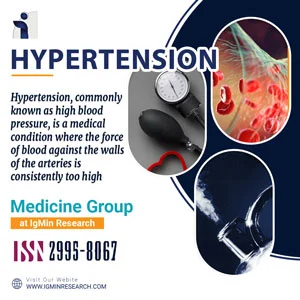
Hypertension, commonly known as high blood pressure, is a chronic medical condition that significantly increases the risk of heart disease, stroke, and kidney failure. As one of the leading causes of morbidity and mortality worldwide, hypertension is a critical area of research focused on understanding its underlying mechanisms, risk factors, and effective management strategies. Researchers in this field study the genetic, environmental, and lifestyle influences that contribute to hypertension, aiming to develop new therapeutic approaches to control blood pressure and prevent complications.
The study of Hypertension integrates insights from cardiovascular medicine, endocrinology, and public health to improve diagnosis, treatment, and prevention strategies. By exploring areas such as pharmacotherapy, lifestyle interventions, and the impact of diet on blood pressure, research in hypertension seeks to enhance patient outcomes and reduce the global burden of this condition. Advancements in this field are essential for developing personalized treatment plans and optimizing long-term management.
Blood Pressure Regulation Genetics of Hypertension Role of the Renin-Angiotensin System Hypertension and Cardiovascular Disease Pharmacotherapy for Hypertension Lifestyle Modifications for Hypertension Management Hypertension in Pregnancy Salt Sensitivity and Blood Pressure Resistant Hypertension Hypertension in Chronic Kidney Disease Endothelial Dysfunction in Hypertension Impact of Obesity on Blood Pressure Hypertension in Older Adults Role of Stress and Mental Health in Hypertension Nutritional Interventions Blood Pressure Monitoring Techniques Hypertension and Stroke Prevention Microbiome and Blood Pressure Advances in Antihypertensive Medications Exercise and Hypertension Management
Open Access Policy refers to a set of principles and guidelines aimed at providing unrestricted access to scholarly research and literature. It promotes the free availability and unrestricted use of research outputs, enabling researchers, students, and the general public to access, read, download, and distribute scholarly articles without financial or legal barriers. In this response, I will provide you with an overview of the history and latest resolutions related to Open Access Policy.