



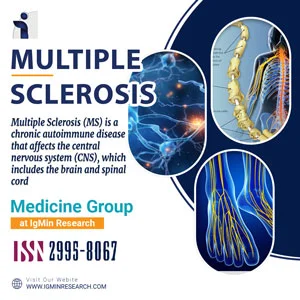
Multiple Sclerosis at IgMin Research | Medicine Group
We focus on fostering research partnerships that lead to faster, collective scientific advancements.
About
Multiple Sclerosis (MS) is a complex, chronic neurological condition that affects the central nervous system, primarily the brain and spinal cord. Characterized by immune-mediated attacks on the protective myelin sheath covering nerve fibers, MS disrupts communication between the brain and the body, leading to a wide range of physical, cognitive, and emotional symptoms. This multifaceted disease manifests differently in each individual, making its diagnosis and management a significant challenge for healthcare providers.
Advancements in research and treatment have transformed the landscape of MS care, offering hope to patients through improved diagnostic tools, disease-modifying therapies, and rehabilitative strategies. MS is at the forefront of neuroimmunology, driving innovations in understanding autoimmune processes and neuroprotection. Collaborative efforts across neurology, physiotherapy, and mental health disciplines are essential in empowering individuals living with MS to maintain quality of life and functional independence.
Why publish with us?
Global Visibility – Indexed in major databases
Fast Peer Review – Decision within 14–21 days
Open Access – Maximize readership and citation
Multidisciplinary Scope – Biology, Medicine and Engineering
Editorial Board Excellence – Global experts involved
University Library Indexing – Via OCLC
Permanent Archiving – CrossRef DOI
APC – Affordable APCs with discounts
Citation – High Citation Potential
Which articles are now trending?
Research Articles
- The Influence of Low Pesticide Doses on Fusarium Molds
- Wishful Thinking or Valuable Forecasts? The Value of Policy Rate Predictions in Sweden
- On how Doping with Atoms of Gadolinium and Scandium affects the Surface Structure of Silicon
- Unveiling the Hidden Beat: Heart Rate Variability and the Vagus Nerve as an Emerging Biomarker in Breast Cancer Management
- Efficacy of Alternative Insecticides against Dusky Cotton Bug (Oxycarenus laetus) to Improve Yield Losses in Cotton Crops through Residue-based Bioassay
- A Multi-Model Simulation Framework for Sponge Park Concept Achieving Urban Water Energy Nexus Sustainability in Hyper Arid Climates